Why the return of rate hikes is reinforcing a broader repricing of duration, credit, and the cost of capital
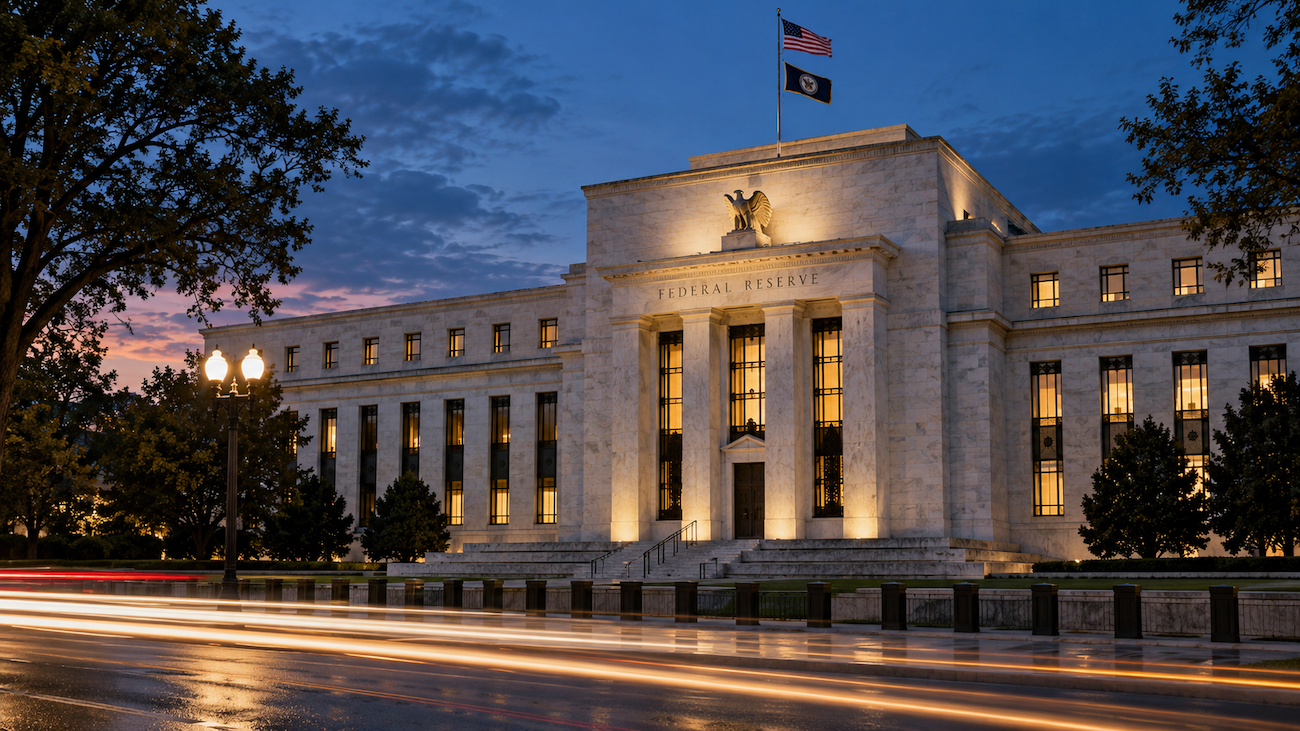
The Federal Reserve’s first interest-rate increase since 2023 arrived after bond investors had already delivered a substantial adjustment of their own. On September 16, the Federal Open Market Committee voted unanimously to raise its benchmark target range by a quarter of a percentage point to 3.75%–4.00%. The statement accompanying the decision described resilient spending, robust capital investment, and inflation that remained elevated. The immediate policy action was modest in size. The financing environment in which it occurred had already changed considerably.
The previous day, the yield on the ten-year Treasury had touched approximately 5.04%, while the thirty-year yield reached about 5.40%, both their highest intraday levels since 2007. These were increases in the returns available to new buyers and corresponding declines in the market prices of existing fixed-rate bonds. They also raised the reference rates against which a wide range of private borrowing decisions would be evaluated. The adjustment had begun before the committee announced a change in the overnight rate.
The sequence illustrates an important feature of monetary transmission. Financial conditions respond to expectations about policy and the economy, rather than waiting for an official announcement. Longer-term borrowing rates incorporate judgments about the path ahead, sometimes well before those judgments appear in central-bank decisions. For institutions managing assets and liabilities, the relevant interest rate is consequently not always the one attracting the most attention in Washington.
One Decision, Several Prices of Money
The federal funds target concerns overnight borrowing between financial institutions. A ten-year Treasury yield reflects a much longer horizon, incorporating expectations about short-term rates over the life of the security and compensation for bearing the uncertainty associated with that horizon. Economists call the latter component the term premium. Research from the Federal Reserve Bank of New York uses this distinction to separate changes in the expected policy path from changes in the compensation investors require for holding longer-term debt.
The distinction prevents a common analytical mistake. A ten-year yield near 5% does not mean investors expect the overnight policy rate to remain at 5% for ten years. Nor does a quarter-point increase in the policy rate require every Treasury maturity to rise by the same amount. Expectations can change at different points along the curve, while the premium for holding duration can move independently. Term-premium estimates are themselves model-dependent, so the explanation for a yield movement cannot be read directly from the yield alone.
This also explains why a rate increase can sometimes coexist with falling long-term yields. Investors might interpret tighter policy as reducing future inflation risk or weakening growth sufficiently to permit lower rates later. Alternatively, they might conclude that the increase is only the beginning of a more extended adjustment. Historical New York Fed research found that term premia did not typically rise when monetary policy tightened, underscoring the danger of assuming a mechanical relationship between the committee’s decision and the entire bond market.
The Outlook Beyond the Quarter Point
The September projections provided more information than the rate decision alone. The median participant assessment placed the federal funds rate at 4.1% at the end of both 2026 and 2027, compared with June projections of 3.8% and 3.6%, respectively. The new year-end projection was consistent with another quarter-point increase after September’s decision. These figures represent participants’ individual assessments of appropriate policy under their economic assumptions, not a commitment by the committee to a predetermined course.
The inflation projections explained part of that reassessment. Participants’ median forecast put inflation, measured by the personal consumption expenditures price index, at 3.7% over the four quarters ending in late 2026, with a return to 2% projected for 2029. The implications for lenders extend beyond the timing of the next meeting. A slower return to price stability changes the assumptions under which nominal income, refinancing costs, and the purchasing power of future repayments are evaluated.
Energy has complicated the adjustment. Reporting ahead of the meeting linked the global rise in yields partly to higher oil prices and expectations of further monetary tightening. An energy disruption can increase costs while weakening demand, presenting a different challenge from an expansion driven primarily by stronger spending. The Bank for International Settlements has warned that repeated supply shocks can also make inflation more persistent if expectations become less firmly anchored.
For a borrower, the source of the shock matters as much as its size. Stronger demand may support revenue growth alongside higher interest expense. An increase in energy costs can instead squeeze margins while financing also becomes more expensive. Two companies facing the same borrowing rate may therefore experience quite different changes in debt-service capacity.
Supply and the Price of Long-Term Capital
The expected course of monetary policy is only part of the discussion. Reuters reported that investors also cited heavy debt issuance and concerns about the fiscal outlook among the pressures affecting Treasury yields before the September meeting. These are market interpretations rather than a precise accounting of each basis point, but they draw attention to the quantity of long-term financing being sought alongside its price.
Additional supply must find buyers willing to absorb its maturity and interest-rate exposure. Where demand does not expand on equivalent terms, prices may need to adjust. The mechanism does not require investors to conclude that a sovereign borrower will default. They may simply require greater compensation for committing capital for longer, particularly when inflation and future funding conditions are uncertain.
The ability of the market to intermediate that supply also matters. In its 2026 Annual Economic Report, the BIS examined the interaction between high public debt and the growing role of non-bank financial institutions in sovereign debt markets. Its concern included the possibility that leverage and funding pressures could amplify market stress. That analysis adds a financial-market dimension to a debate often reduced to government borrowing totals.
None of this establishes that yields must keep rising. Higher returns can attract additional demand, while a change in inflation or growth expectations can alter the terms on which investors are prepared to lend. The implication is narrower: the long end of the curve reflects a financing market with its own supply, demand, and risk-bearing capacity. It cannot be understood solely as a distant extension of the current policy rate.
How the Repricing Reaches Companies
Corporate borrowing introduces a further distinction between the underlying interest-rate level and the additional spread paid by the issuer. A bond’s total yield can rise because the comparable Treasury yield increases, because the credit spread widens, or because both occur together. The spread itself reflects more than expected default losses, including compensation for other risks associated with holding corporate rather than government debt.
A simplified example shows why the distinction matters. Suppose a company borrows at one percentage point above a comparable Treasury yield. If the Treasury yield rises from 4% to 5% while the spread remains unchanged, the company’s new borrowing cost rises from approximately 5% to 6%. The market has not necessarily become more pessimistic about that company relative to the sovereign benchmark. Its financing has nevertheless become more expensive.
The effect on cash flow depends on the debt already outstanding. A conventional fixed-rate bond continues to pay its contractual coupon despite changes in its market value. Floating-rate obligations can transmit changes in reference rates more quickly, subject to their terms. For fixed-rate borrowers, the greater pressure may emerge when debt matures, a refinancing is required, or new investment must be funded.
This creates an uneven transmission across businesses. A company with substantial cash generation and distant maturities can have time to adapt. Another with near-term refinancing needs may encounter the new cost of capital immediately. The distinction makes the maturity schedule, interest coverage, and availability of funding more informative than a broad classification of a borrower as simply exposed or unexposed to higher rates.
Investment decisions can change before the accounting effects become visible. The Fed’s own explanation of monetary transmission emphasizes the importance of longer-term rates for spending on buildings, equipment, and other projects with extended planning horizons. A proposed investment may face a higher financing hurdle even while the company’s existing interest bill remains largely unchanged.
Duration Viewed From Both Sides of the Balance Sheet
For investors, the rise in yields presents an immediate tension between improved prospective income and losses on existing holdings. Higher market yields reduce the value of fixed-rate cash flows contracted when rates were lower. The sensitivity varies with the bond’s characteristics, including its maturity and coupon, and is commonly assessed through duration. Credit quality does not remove this interest-rate exposure.
As an illustration, a bond with a modified duration of eight would experience an approximate 4% price decline following a half-percentage-point increase in its yield. That is a first-order estimate, before allowing for convexity, accrued income, or changes in credit spreads. The example shows how a modest-looking yield movement can create a material change in market value without any missed payment.
The significance of that movement depends on the liability being funded. A portfolio intended to meet spending within the next year has a different problem from one supporting contractual obligations several decades away. Longer-duration assets may help match the sensitivity of long-dated liabilities, while creating an unsuitable mismatch for near-term cash needs. The same security can therefore reduce risk in one balance sheet and increase it in another.
This is why a blanket conclusion that institutions should avoid long-term bonds would miss the central issue. Duration is an exposure to be assigned a purpose, rather than a category to be accepted or rejected on the strength of the latest announcement. The question concerns whether the institution can tolerate the price movement, whether the exposure serves its obligations, and whether the compensation is adequate for the risks retained.
When the Usual Diversification Test Changes
A rise in yields can also alter the relationship between assets that appear diversified on a portfolio statement. San Francisco Fed research published in August examined how supply-side risks can weaken economic activity while raising inflation pressure. Such a combination can depress equity valuations and push bond yields higher at the same time, leaving both stock prices and fixed-rate bond prices under pressure.
That possibility does not make bonds ineffective across all economic conditions. A demand-led slowdown may produce a different combination of falling earnings expectations, lower inflation, and declining interest rates. The distinction is between the sources of the shock, not a permanent verdict on the usefulness of an asset class. Diversification must be tested against the conditions most relevant to the institution, rather than inferred from a relationship observed during a different period.
The practical consequence is a more demanding examination of common exposures. Technology equities, long-duration bonds, and leveraged infrastructure investments may occupy separate allocation categories while sharing sensitivity to higher discount rates. A portfolio can contain many securities and still depend heavily on one favorable assumption about financing conditions. Identifying that dependence is more useful than simply increasing the number of holdings.
An American Decision With International Reach
The effects extend beyond U.S. borrowers because the dollar is also a funding currency for activity conducted elsewhere. BIS research on international banking has shown that cross-border lending is influenced by monetary policy in the lender’s country, the borrower’s country, and the country issuing the currency in which the loan is denominated. A dollar borrowing relationship can therefore transmit U.S. financial conditions even when neither the project nor its revenues is located in the United States.
Consider a company earning local-currency revenues in Latin America while servicing dollar debt. A rise in its dollar funding cost would put pressure on interest coverage; depreciation of the revenue currency could compound that pressure. A company with dollar export earnings would face a different calculation. Geography alone does not establish the exposure, because the currencies of revenue, borrowing, and hedging determine how the balance sheet absorbs the change.
European funding alternatives require the same care. A lower coupon in euros does not automatically provide cheaper financing for a dollar requirement. ECB analysis of cross-border corporate issuance identifies the importance of benchmark-rate differences, issuer spreads, and the cost of currency hedging. The appropriate comparison is the full cost of financing after those components are considered, rather than the coupon printed on the security.
For internationally active institutions, a Fed decision consequently belongs inside a wider treasury assessment. Dollar liquidity, euro obligations, local operating balances, and hedging commitments cannot be evaluated independently when a change in one market affects the cost of moving between them. A framework built around actual payments and funding requirements offers a firmer basis for decisions than a directional prediction about which currency will strengthen next.
Liquidity Between Two Possible Outcomes
Higher short-term rates can improve the income available on newly placed liquidity, but they do not eliminate the trade-off between access and return. Shorter instruments generally reduce exposure to long-term rate movements while leaving more capital to be reinvested at future rates. Extending maturity can secure contractual income for longer, but introduces greater sensitivity to changing yields and may be inappropriate for money required sooner. FINRA identifies both interest-rate and reinvestment risk as central considerations in bond investing.
The competing risks are easiest to see through two scenarios. If inflation persists and rates rise further, short maturities may allow proceeds to be reinvested on improved terms while longer bonds incur additional market-value losses. If growth weakens and rates fall, the income available when short instruments mature may decline, while longer fixed-rate holdings may appreciate. Neither scenario justifies treating one maturity choice as universally superior.
Liquidity planning begins with a different question: when must capital be available, and in which currency? Payroll, capital calls, collateral requirements, and scheduled liabilities cannot be postponed merely because a market forecast has changed. Separating those obligations from capital that can remain invested gives an institution room to take measured duration and credit exposure without making essential payments depend on favorable market conditions.
What the Market Can and Cannot Tell Us
The bond market’s lead should not be confused with perfect foresight. Its prices incorporate expectations and risk compensation, and both can change. An anticipated sequence of rate increases can be revised if inflation subsides, growth weakens, or demand for long-term securities strengthens. Equally, a single increase in the policy rate does not establish that the adjustment in market borrowing costs is complete.
The title of this episode is therefore about timing rather than authority. The market repriced before the Fed acted, but that sequence does not mean the committee merely followed investors or that investors have resolved the economic uncertainty. Both are responding to information about inflation, activity, and financial conditions. For borrowers and lenders, the consequences are real even when the interpretation remains contested.
The most useful institutional response is to examine what the repricing changes in the underlying financial plan. A borrower must assess refinancing costs against future cash generation. An investor must distinguish a higher yield from better compensation for the particular risks accepted. A treasury must determine whether liquidity remains available without forcing an asset sale or an unfavorable currency conversion.
September’s decision is a clear policy event within a larger financial adjustment. Its significance will be measured through borrowing terms, investment decisions, portfolio values, and the ability of balance sheets to absorb changing conditions. The bond market’s message is already present in those calculations: the price of capital can change before the announcement, and sound financial planning cannot afford to wait for the announcement to recognize it.
About Berkeley Financial
Berkeley Financial is an international financial group providing institutional banking, private banking, custody, and cross-border financial solutions. With a focus on governance, relationship-driven execution, and multi-jurisdiction expertise, Berkeley supports institutions and sophisticated clients with international financial needs across key markets, including Latin America, Europe, and the United States.
Back to Home
References
- Board of Governors of the Federal Reserve System. “Federal Reserve issues FOMC statement.” September 16, 2026.
- Board of Governors of the Federal Reserve System. “Summary of Economic Projections.” September 16, 2026. Accessible tables and projection materials.
- Reuters. “Treasuries: 10-year note hits 19-year high with Fed decision eyed.” September 15, 2026. Republished by London South East.
- Reuters. “US 10-year yields reach 5%, highest since 2023.” September 14, 2026.
- Reuters. “Stocks fall as Fed delivers hawkish rate hike.” September 16, 2026.
- Board of Governors of the Federal Reserve System. “Monetary Policy: What Are Its Goals? How Does It Work?” Updated July 29, 2021.
- Adrian, Tobias, Richard K. Crump, Benjamin Mills, and Emanuel Moench. “Treasury Term Premia: 1961–Present.” Federal Reserve Bank of New York, Liberty Street Economics, May 12, 2014.
- Adrian, Tobias, Richard K. Crump, and Emanuel Moench. “Do Treasury Term Premia Rise around Monetary Tightenings?” Federal Reserve Bank of New York, Liberty Street Economics, April 15, 2013.
- Mertens, Thomas, and Wesley Wasserburger. “Financial Markets, Oil Prices, and Supply-Side Risks.” Federal Reserve Bank of San Francisco, FRBSF Economic Letter, No. 2026-21, August 10, 2026.
- Bank for International Settlements. Annual Economic Report 2026. June 28, 2026. Particularly Chapter II, “High public debt and shifting financial markets: challenges for central banks.”
- Elton, Edwin J., Martin J. Gruber, Deepak Agrawal, and Christopher Mann. “Explaining the Rate Spread on Corporate Bonds.” The Journal of Finance, Vol. 56, No. 1, February 2001, pp. 247–277.
- U.S. Securities and Exchange Commission, Office of Investor Education and Advocacy. “What Are Corporate Bonds?” Investor Bulletin, June 4, 2013.
- Financial Industry Regulatory Authority. “Bonds.” Investor education resource covering bond structures, interest-rate sensitivity, credit risk, liquidity, and reinvestment risk.
- Avdjiev, Stefan, Catherine Casanova, Patrick McGuire, and Goetz von Peter. “Transmission of monetary policy through global banks: whose policy matters?” Bank for International Settlements, BIS Working Papers, No. 737, August 20, 2018.
- Domenech Palacios, Mar, Martina Jančoková, and Toma Tomov. “Reverse Yankee bonds.” European Central Bank, published in The International Role of the Euro, June 2025.
Sources accessed September 16, 2026. Market figures, forecasts, and policy observations reflect the dates specified in the original publications.
Disclaimer
This article is provided for informational purposes only and does not constitute investment, legal, tax, regulatory, or financial advice, nor an offer, solicitation, or recommendation to buy or sell any security, bond, currency, financial instrument, investment product, or asset. Market observations reflect information available on September 16, 2026. Economic projections and market expectations are subject to change and do not guarantee future outcomes. Fixed-income investments and cross-border financing arrangements may involve interest-rate, credit, liquidity, inflation, reinvestment, currency, counterparty, and other risks, including loss of principal. Institutions and clients should evaluate financial decisions against their objectives, obligations, liquidity needs, risk tolerance, and applicable regulatory requirements.